
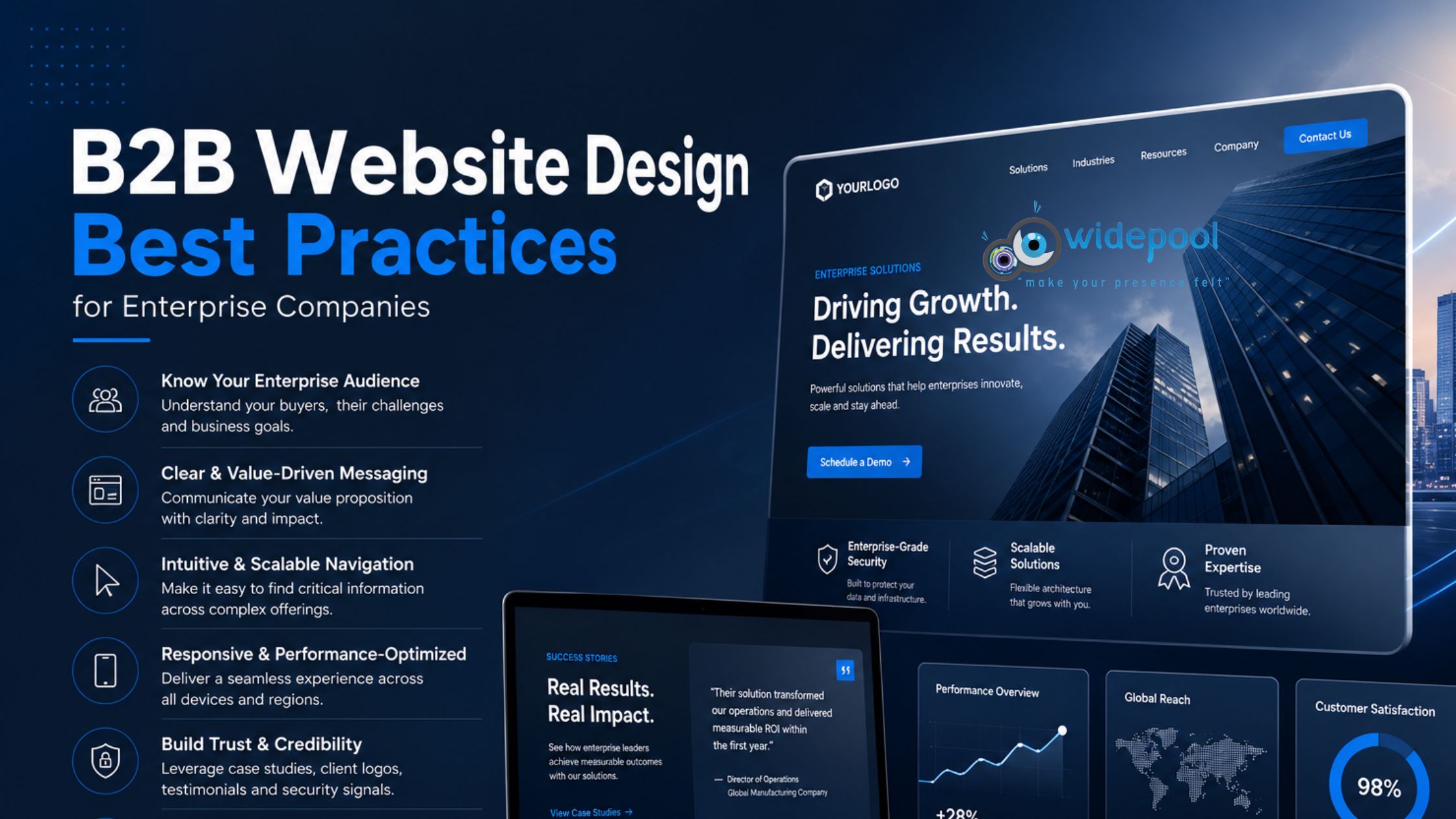
Research published by Stanford Web Credibility Studies revealed that nearly 75% of users judge a company’s credibility based on website design. For enterprise organizations operating in competitive industries, this statistic highlights why B2B website design best practices directly influence revenue growth, lead generation, and long-term brand authority. A poorly optimized website can silently damage trust, reduce inquiries, and weaken visibility in Google search results, while a strategically developed enterprise platform can become one of the strongest digital assets a company owns.
Modern enterprise buyers do extensive online research before engaging with vendors. They compare competitors, evaluate authority, analyze case studies, and review website experiences before requesting consultations. This means enterprise businesses cannot afford outdated websites, confusing layouts, or weak SEO foundations. Companies investing in professional digital transformation are already capturing qualified leads through intelligent SEO-driven web experiences.
Widepool helps enterprise organizations build scalable websites designed not only for aesthetics but also for visibility, conversions, and long-term search performance. From technical SEO implementation to intelligent user journey optimization, Widepool creates websites that function as high-performing lead generation ecosystems.
Why are B2B website design best practices important for enterprise businesses?
B2B website design best practices help enterprise companies improve customer trust, organic search visibility, user engagement, and conversion performance. Enterprise buyers expect professionalism, speed, clarity, and credibility from the very first interaction.
Enterprise purchasing decisions are rarely impulsive. Most B2B sales cycles involve multiple stakeholders, extensive evaluations, and long research phases. If a company website creates friction or confusion, decision-makers quickly move toward competitors offering smoother digital experiences.
Widepool develops enterprise-focused digital platforms that align:
- Search engine optimization
- Lead generation architecture
- User behavior analysis
- Enterprise branding
- Technical website performance
- Mobile responsiveness
- Authority-driven content
- Scalable website frameworks
This integrated strategy allows enterprise businesses to create sustainable online growth instead of relying entirely on paid advertising.
How does enterprise website UX impact enterprise buying decisions?
Enterprise website UX directly influences how business buyers perceive credibility, professionalism, and operational capability. A seamless experience improves trust and increases conversion potential.
Enterprise visitors typically arrive with specific goals. They may want to compare services, evaluate expertise, understand pricing structures, or validate technical capabilities. Poor layouts, slow-loading pages, and inconsistent messaging create frustration that negatively impacts conversions.
Widepool prioritizes enterprise website UX by focusing on:
- Clear navigation pathways
- Fast-loading infrastructure
- Responsive mobile experiences
- Structured content hierarchy
- SEO-friendly architecture
- Optimized inquiry forms
- User-focused service pages
- Reduced friction during interactions
Every second of delay and every unnecessary click can reduce engagement. Enterprise buyers value efficiency, and websites must reflect operational excellence at every stage.
What makes an effective B2B website structure?
A strong B2B website structure ensures visitors can easily access relevant services, understand company expertise, and move naturally through the buying journey.
Enterprise websites often contain large volumes of information. Without proper organization, users become overwhelmed. Widepool creates intelligent structural frameworks that simplify complex business offerings while maintaining SEO depth.
An effective B2B website structure generally includes:
| Website Section | Purpose |
|---|---|
| Homepage | Establishes authority and introduces solutions |
| Service Pages | Targets specific SEO and lead generation opportunities |
| Industry Pages | Addresses niche customer requirements |
| Case Studies | Builds trust through proof and outcomes |
| Blog Content | Supports SEO visibility and thought leadership |
| Contact Pages | Improves conversion accessibility |
Widepool structures enterprise websites to support both search engines and real users simultaneously, ensuring technical efficiency without sacrificing readability.
Why are high-converting B2B sites critical for enterprise growth?
High-converting B2B sites help enterprise organizations maximize lead acquisition, improve ROI, and reduce wasted marketing spend.
Many enterprise businesses spend heavily on advertising campaigns without optimizing website conversion pathways. Traffic generation alone does not guarantee revenue growth. Conversion-focused design is what transforms website visitors into business opportunities.
Widepool builds high-converting B2B sites by combining:
- SEO-driven content strategy
- Conversion-focused CTAs
- Trust-building messaging
- Performance optimization
- User behavior insights
- Data-backed design improvements
- Mobile-first development
- Authority-enhancing visuals and layouts
Enterprise organizations that fail to optimize conversions often lose qualified leads silently every day. Competitors with stronger digital experiences gain a substantial advantage over time.
What should enterprise companies include in B2B homepage design?
B2B homepage design should immediately communicate expertise, credibility, industry relevance, and conversion opportunities within the first few seconds of user interaction.
The homepage is often the first impression an enterprise buyer receives. If messaging is unclear or navigation feels overwhelming, trust begins to decline instantly.
Widepool develops B2B homepage design strategies that focus on:
- Clear value propositions
- SEO-enhanced headlines
- Strategic service highlights
- Trust indicators and certifications
- Lead generation CTAs
- Fast-loading layouts
- Enterprise-focused visuals
- Content hierarchy optimization
The goal is not simply to create visually attractive pages. The objective is to create experiences that guide enterprise users toward action while improving SEO visibility simultaneously.
How does enterprise navigation UX improve engagement?
Enterprise navigation UX improves usability, reduces bounce rates, and helps visitors discover relevant information quickly and efficiently.
Large enterprise websites often contain dozens or hundreds of pages. Without intelligent navigation systems, users struggle to locate important information, leading to frustration and abandonment.
Widepool enhances enterprise navigation UX using:
- Logical menu structures
- SEO-friendly internal linking
- Minimal-click navigation pathways
- Responsive mobile menus
- Service categorization strategies
- Sticky navigation systems
- Structured breadcrumbs
- Content prioritization frameworks
Google also rewards websites with strong navigation architecture because improved crawlability helps search engines understand content relationships more effectively.
Why is conversion optimization B2B essential for SEO success?
Conversion optimization B2B improves both lead generation performance and search engine engagement metrics, making it an essential component of long-term SEO strategy.
SEO alone is not enough. Businesses must also ensure visitors take meaningful actions after arriving on the website. Widepool integrates conversion-focused methodologies throughout enterprise web development projects.
Conversion optimization B2B strategies implemented by Widepool include:
- CTA positioning analysis
- Landing page optimization
- Lead form simplification
- Page speed enhancement
- Content readability improvements
- Trust-building design elements
- Behavior tracking and optimization
- SEO-integrated conversion funnels
Even modest improvements in conversion rates can generate substantial revenue increases for enterprise organizations managing high-value contracts.
What are the most important business website best practices?
Business website best practices combine SEO, usability, performance optimization, trust-building, and mobile responsiveness to create sustainable online growth.
Enterprise businesses that ignore digital optimization risk becoming invisible in competitive markets. Buyers increasingly expect fast, secure, and informative online experiences before engaging with service providers.
Widepool recommends the following business website best practices for enterprise companies:
- Invest in technical SEO foundations
- Prioritize mobile-first development
- Use structured schema markup
- Improve page loading performance
- Create authority-driven content
- Optimize internal linking
- Use secure HTTPS infrastructure
- Continuously monitor analytics and conversions
- Develop search-intent-driven service pages
- Maintain consistent branding across all pages
Businesses that delay website modernization often experience declining search visibility and reduced lead quality over time. Meanwhile, competitors investing in digital optimization continue strengthening their online authority.
How does SEO transform enterprise lead generation?
SEO allows enterprise companies to attract highly targeted traffic from decision-makers actively searching for services, solutions, and expertise online.
Unlike paid advertising, SEO delivers long-term visibility and sustainable lead acquisition. A properly optimized enterprise website can continue generating qualified traffic for years.
Widepool integrates SEO deeply into every enterprise project through:
- Keyword-driven content architecture
- Technical SEO optimization
- Search-intent mapping
- Schema implementation
- Authority-building content strategies
- Internal linking optimization
- Metadata enhancements
- Enterprise-level analytics tracking
Enterprise companies without a strong SEO presence often lose substantial business opportunities to competitors already ranking prominently in search results.
About Widepool
Widepool is a professional digital marketing and enterprise website solutions provider specializing in SEO, enterprise web development, branding, content marketing, lead generation, and digital growth strategies. Based in India and serving businesses globally, Widepool helps organizations build scalable digital ecosystems that improve visibility, authority, and conversion performance.
Businesses seeking professional assistance with enterprise websites, SEO strategies, and lead generation optimization can connect with Widepool through the official contact page at https://widepool.com/contact/.
Organizations may also reach out directly using the contact numbers +91 9019676890 and +91 9986450820 to request a consultation meeting. Additionally, visitors can send a WhatsApp inquiry using the interface available on the official website. Widepool’s team will connect to discuss customized digital marketing solutions designed specifically for enterprise growth.
In today’s competitive digital environment, enterprise companies that invest in SEO, user experience, and strategic website optimization position themselves far ahead of competitors still relying on outdated digital approaches. Businesses that take action now will be the ones dominating visibility, trust, and lead acquisition in the years ahead.
Frequently Asked Questions
Why are B2B website design best practices important for enterprise companies?
Enterprise buyers typically research vendors extensively before making decisions, so following proven B2B website design best practices helps companies create credibility, improve lead quality, and support longer sales cycles. A professional enterprise website must communicate authority, technical expertise, scalability, and trust within seconds of a visitor landing on the page.
Widepool helps enterprise organizations build digital experiences that align with buyer intent, stakeholder expectations, and measurable business goals. Their approach combines strategic content hierarchy, responsive design, accessibility, and performance optimization to create websites that support both marketing and enterprise sales teams.
How does enterprise website UX impact B2B lead generation?
Strong enterprise website UX reduces friction throughout the customer journey and helps decision-makers quickly find the information they need. Enterprise users often compare multiple vendors, review case studies, assess technical capabilities, and evaluate trust signals before contacting a company.
Widepool focuses on creating intuitive layouts, fast-loading pages, clear messaging, and seamless mobile experiences that improve engagement and increase conversion opportunities. Their UX strategy is designed to guide enterprise buyers naturally toward consultations, demos, or inquiries without overwhelming them with unnecessary complexity.
What makes an effective B2B website structure for enterprise brands?
An effective B2B website structure should prioritize clarity, scalability, and user intent. Enterprise websites often contain large amounts of content, including service pages, resources, industry solutions, integrations, and support documentation. Without a logical structure, users can struggle to navigate the site efficiently.
Widepool develops scalable information architecture that supports both SEO performance and usability. Their team organizes content into logical pathways that help visitors move from awareness to consideration and ultimately to conversion while maintaining a consistent user experience across all devices.
What elements are commonly found in high-converting B2B sites?
High-converting B2B sites typically include clear value propositions, compelling calls-to-action, trust indicators, industry-specific messaging, client testimonials, and conversion-focused landing pages. Enterprise audiences also expect transparency, technical credibility, and evidence of successful project delivery.
Widepool integrates conversion-focused design strategies with data-driven content placement to help businesses generate qualified leads. Their websites are designed to encourage user action while maintaining a professional and enterprise-ready appearance that appeals to decision-makers across multiple departments.
Why is B2B homepage design so important for enterprise businesses?
The homepage is often the first interaction potential clients have with a company, making B2B homepage design critical for establishing trust and communicating expertise. Enterprise buyers want to immediately understand what a company offers, who it serves, and why it stands out from competitors.
Widepool creates enterprise homepages with strong messaging hierarchy, strategic CTA placement, clean visuals, and performance optimization. Their designs are crafted to balance branding, usability, and lead generation while ensuring visitors can quickly access relevant information and next steps.
How does enterprise navigation UX improve user engagement?
Enterprise navigation UX helps users locate information quickly without confusion or unnecessary clicks. Poor navigation can increase bounce rates and reduce trust, especially on large enterprise websites with multiple services and industries to showcase.
Widepool designs navigation systems that simplify complex content ecosystems through intuitive menus, sticky navigation, structured internal linking, and mobile-friendly interactions. This creates a smoother browsing experience that keeps users engaged and encourages deeper exploration of the website.
What role does conversion optimization B2B strategy play in website performance?
Conversion optimization B2B strategy focuses on improving the percentage of website visitors who take meaningful actions such as booking consultations, requesting demos, or submitting inquiries. For enterprise businesses, even small improvements in conversion rates can significantly impact revenue growth and lead quality.
Widepool uses analytics-driven design decisions, optimized forms, CTA testing, user behavior insights, and content refinement to improve conversion performance. Their process helps enterprise companies identify friction points and transform websites into stronger lead-generation assets.
What are some essential business website best practices for enterprise growth?
Some of the most important business website best practices include mobile responsiveness, fast page speed, accessibility compliance, SEO-friendly architecture, secure hosting, clear messaging, and consistent branding. Enterprise websites should also support scalability and integration with CRM, analytics, and marketing automation tools.
Widepool provides enterprise website solutions that combine design, development, performance optimization, and long-term scalability. Their team helps businesses build modern digital platforms that support brand credibility, improve user engagement, and create sustainable business growth opportunities.