
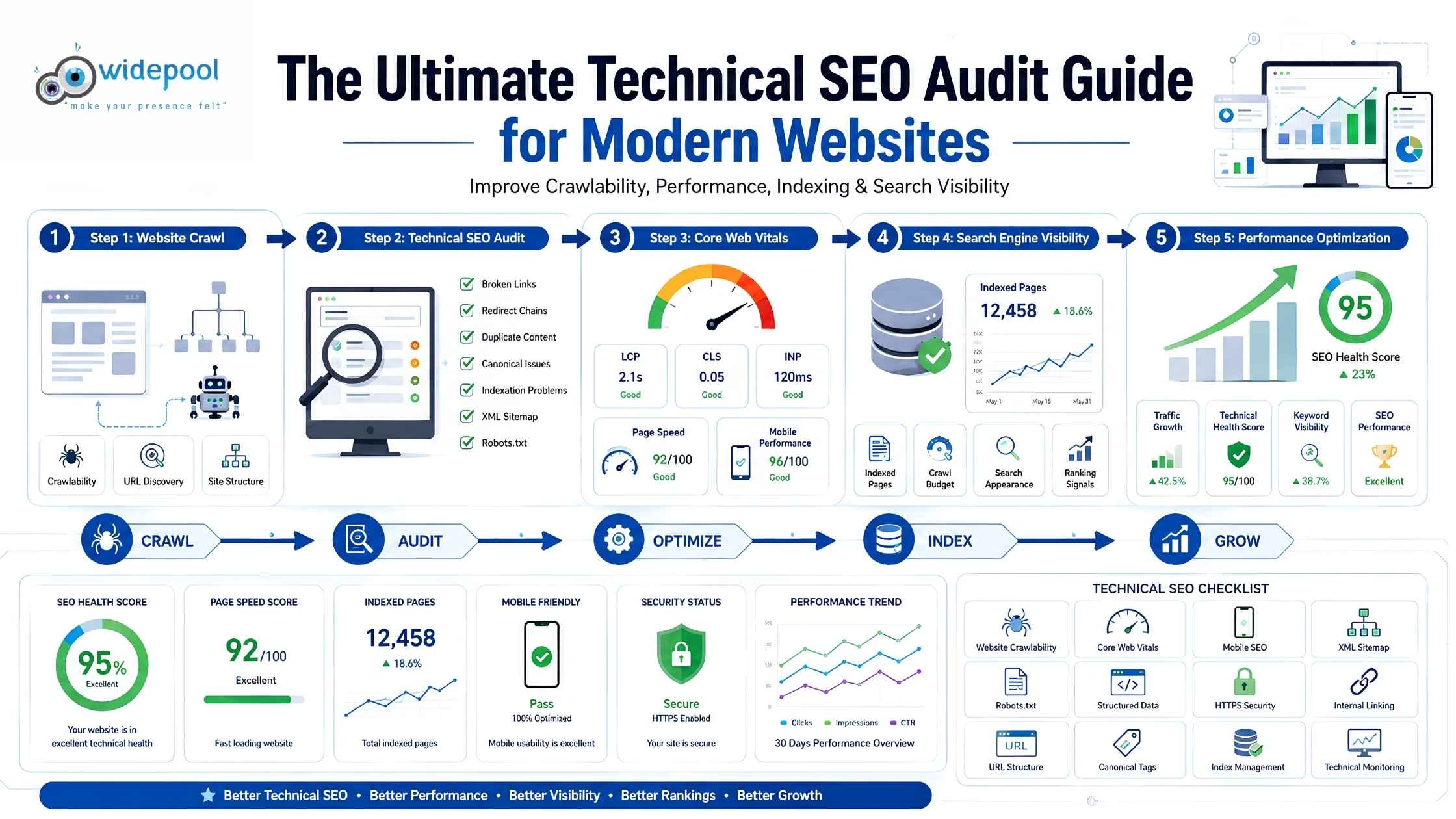
This in-depth guide will walk you through each step of a technical SEO audit, reveal the essentials of a robust site audit checklist, break down crawl optimization, and demystify Core Web Vitals SEO. By the end, you’ll understand why technical SEO is the game-changer your business needs—and why Widepool should be your trusted digital partner.
What Is A Technical SEO Audit And Why Is It Crucial?
A technical SEO audit is a comprehensive process that evaluates the underlying technical health of your website. It identifies errors that hinder search engine crawling, indexing, and ranking. In essence, it’s the foundation of SEO—without it, even the best content or backlinks won’t drive results.
- Ensures search engines can crawl and index every vital page
- Uncovers speed, security, and mobile-friendliness issues
- Identifies broken links, duplicate content, and crawl traps
- Improves user experience, boosting conversions and sales
Widepool’s technical SEO audit doesn’t just reveal problems—it prioritizes fixes and provides actionable recommendations, ensuring your website is search-engine ready and user-friendly.
How To Perform A Technical SEO Audit: The Step-By-Step Process
The technical SEO audit process can be daunting, but breaking it down into actionable steps ensures nothing is missed. Here’s how Widepool approaches every audit, ensuring thoroughness and clarity:
- Crawl Your Website: We use advanced tools to simulate how search engines crawl your site, detecting errors and obstacles.
- Check Indexability: We ensure your pages are accessible to search engines and not being blocked by robots.txt or meta tags.
- Analyze Site Architecture: Proper internal linking and logical structure are key for both SEO and user experience.
- Review On-Page Elements: We assess title tags, meta descriptions, headers, and content for optimization and uniqueness.
- Test Site Speed: Using Google’s PageSpeed Insights, we identify and resolve performance bottlenecks.
- Ensure Mobile-Friendliness: Responsive design is non-negotiable—Google’s mobile-first indexing demands it.
- Strengthen Security: We verify HTTPS implementation and check for mixed content or security vulnerabilities.
- Fix Broken Links & Redirects: 404 errors and misconfigured redirects can hurt both SEO and user trust.
- Audit Structured Data: We implement schema markup, enhancing your chances for rich results and featured snippets.
What Should Be On Your Site Audit Checklist?
A well-structured site audit checklist is the backbone of any technical SEO strategy. Here’s what Widepool includes in every audit:
- Crawl errors: Identify and fix pages with crawlability issues using Google Search Console and third-party tools.
- Index status: Ensure all important pages are indexed and irrelevant pages (like admin or staging) are not.
- Mobile usability: Confirm your site passes Google’s mobile usability tests and that all elements are functional on mobile.
- Site speed: Analyze load times and optimize images, scripts, and server response.
- HTTPS and security: Make sure your SSL is valid and no insecure content is present.
- Duplicate content: Use canonical tags and eliminate thin or duplicate pages.
- XML sitemaps: Ensure sitemaps are up-to-date, error-free, and submitted to Google and Bing.
- Robots.txt: Check for accidental blocking of important pages or resources.
- Structured data and schema: Test and deploy schema for improved SERP visibility.
- Core Web Vitals: Measure and optimize LCP, FID, and CLS for superior user experience.
Widepool’s exhaustive site audit checklist leaves no stone unturned, ensuring your website is primed for both search engines and real users.
How Does Crawl Optimization Impact SEO?
Crawl optimization is the art of making your website as easy as possible for search engines to explore. When search engines crawl your site efficiently, they discover, index, and rank more of your valuable content.
- Enhances Indexation: Well-optimized crawl paths ensure every important page is indexed.
- Conserves Crawl Budget: Search engines allocate limited crawl resources; optimization ensures they’re spent on your top pages.
- Reduces Crawl Errors: Fewer dead ends and redirect loops mean better SEO performance.
- Improves SERP Rankings: Efficient crawl paths support faster updates and ranking adjustments.
At Widepool, our crawl optimization techniques include improving internal linking, eliminating orphan pages, and using robots.txt and sitemap best practices to guide search engines where you want them to go.
What Are Core Web Vitals SEO And Why Do They Matter?
Core Web Vitals SEO refers to optimizing your site for Google’s essential user experience metrics: Largest Contentful Paint (LCP), First Input Delay (FID), and Cumulative Layout Shift (CLS). These directly affect how users perceive your website’s speed and stability.
- LCP: Measures loading performance. Aim for LCP under 2.5 seconds.
- FID: Assesses interactivity. Strive for FID below 100 milliseconds.
- CLS: Evaluates visual stability. Keep CLS less than 0.1.
Google has made Core Web Vitals a ranking factor. Sites that excel here enjoy higher rankings, better user engagement, and increased conversions. Widepool’s Core Web Vitals SEO service pinpoints bottlenecks and delivers solutions—compressing images, optimizing scripts, and enhancing server response times.
Why Widepool Is Your Trusted Partner For Technical SEO Success
In today’s hyper-competitive online space, you simply can’t afford to overlook technical SEO. It’s not just about getting more traffic—it’s about getting the right traffic, improving user experience, and driving real business results.
- Expertise: Widepool’s team blends deep technical know-how with real-world business acumen.
- Custom Solutions: No two sites are alike. We tailor every technical SEO audit to your unique needs and goals.
- Proven Results: Our clients consistently see measurable improvements in rankings, speed, and conversions.
- End-to-End Support: From audit to implementation, we handle it all—so you can focus on growth.
Don’t let your competitors outpace you. With Widepool, you’re not just fixing technical issues—you’re building a future-proof, high-performing online presence.
How To Get Started: Lead Generation With Widepool
If you have a website and want to dominate search engine results, search engine optimization is your ticket to success. Don’t settle for mediocre performance when you can have industry-leading results with Widepool’s expert team.
- Ready to take the next step? Fill out our contact form—our specialists will review your needs and schedule a consultation.
- Prefer a direct conversation? Call us at +91 9019676890 or +91 9986450820 to request a meeting.
- On the go? Use the WhatsApp interface on our website to instantly request a callback from our team.
Don’t let another day go by with a website that’s underperforming. Contact Widepool today—and unlock your digital growth potential.
About Widepool
Widepool is a leading digital marketing and SEO services provider based in India, specializing in technical SEO audits, on-page and off-page optimization, digital strategy, and performance marketing for businesses worldwide. Our mission is to help brands achieve sustainable online growth through best-in-class technical SEO solutions, creative strategies, and measurable results.
Choose Widepool, where expertise meets results, and let us transform your website into a search engine powerhouse.
Frequently Asked Questions
What is a technical SEO audit and why is it important for modern websites?
A technical SEO audit is a comprehensive review of your website’s infrastructure to ensure search engines can efficiently crawl, index, and render your pages. It covers aspects such as site architecture, mobile usability, speed, and more. For modern websites, regular technical SEO audits are crucial because they help identify and fix issues that could hinder visibility, organic rankings, and overall performance in search results.
What should be included in a site audit checklist for technical SEO?
An effective site audit checklist should include checks for crawlability and indexability, status code errors, XML sitemaps, robots.txt, canonical tags, duplicate content, schema markup, internal linking, mobile-friendliness, page speed, and Core Web Vitals SEO metrics. Widepool’s technical SEO audit process follows a detailed site audit checklist to ensure all critical technical factors are assessed and optimized.
How does Widepool help with crawl optimization for large and complex websites?
Widepool uses advanced tools and expertise to analyze how search engine bots interact with your website. We identify crawl traps, optimize robots.txt, manage crawl budgets, and structure internal linking to ensure efficient crawl optimization. This approach helps large and complex websites get more of their valuable pages indexed while preventing wasted crawl resources on low-priority or duplicate content.
Why are Core Web Vitals SEO metrics significant, and how does Widepool address them?
Core Web Vitals SEO metrics focus on user experience by measuring loading performance, interactivity, and visual stability. Google uses these as ranking signals, making them essential for technical SEO success. Widepool conducts in-depth analysis of your Core Web Vitals, recommends actionable improvements, and works with your development team to optimize site speed, reduce layout shifts, and improve responsiveness across devices.
How often should a technical SEO audit be performed for optimal website health?
It’s recommended to perform a technical SEO audit at least quarterly or after any major site changes, such as redesigns, migrations, or significant content updates. Regular audits ensure that new issues are caught early, and your website continues to meet search engine standards. Widepool offers both one-off and ongoing technical SEO audit services tailored to your needs.
Can Widepool help with fixing issues found during the technical SEO audit?
Absolutely. Widepool doesn’t just identify issues; our team provides clear recommendations and can assist with implementation, whether it’s resolving crawl errors, optimizing site speed, enhancing mobile compatibility, or updating structured data. We work collaboratively with your developers or handle fixes directly, ensuring your website remains technically sound.
What tools does Widepool use for conducting a technical SEO audit?
Widepool leverages industry-leading tools such as Google Search Console, Screaming Frog, Sitebulb, Ahrefs, SEMrush, PageSpeed Insights, and proprietary scripts to conduct a thorough technical SEO audit. Our experts interpret these data sources to prioritize and resolve issues for maximum SEO impact.
How do technical SEO audits by Widepool differ from automated site audits?
While automated site audits provide valuable data, Widepool goes beyond basic reporting by applying expert analysis and context to each finding. Our technical SEO audit process includes manual review, prioritization, and strategic recommendations customized for your business goals, resulting in actionable solutions rather than generic checklists.
How can I get started with a technical SEO audit from Widepool?
Getting started is simple. Contact Widepool through our website to request a consultation. We’ll discuss your goals, review your current website setup, and provide a proposal outlining our technical SEO audit process and solutions tailored for your site’s unique needs.