
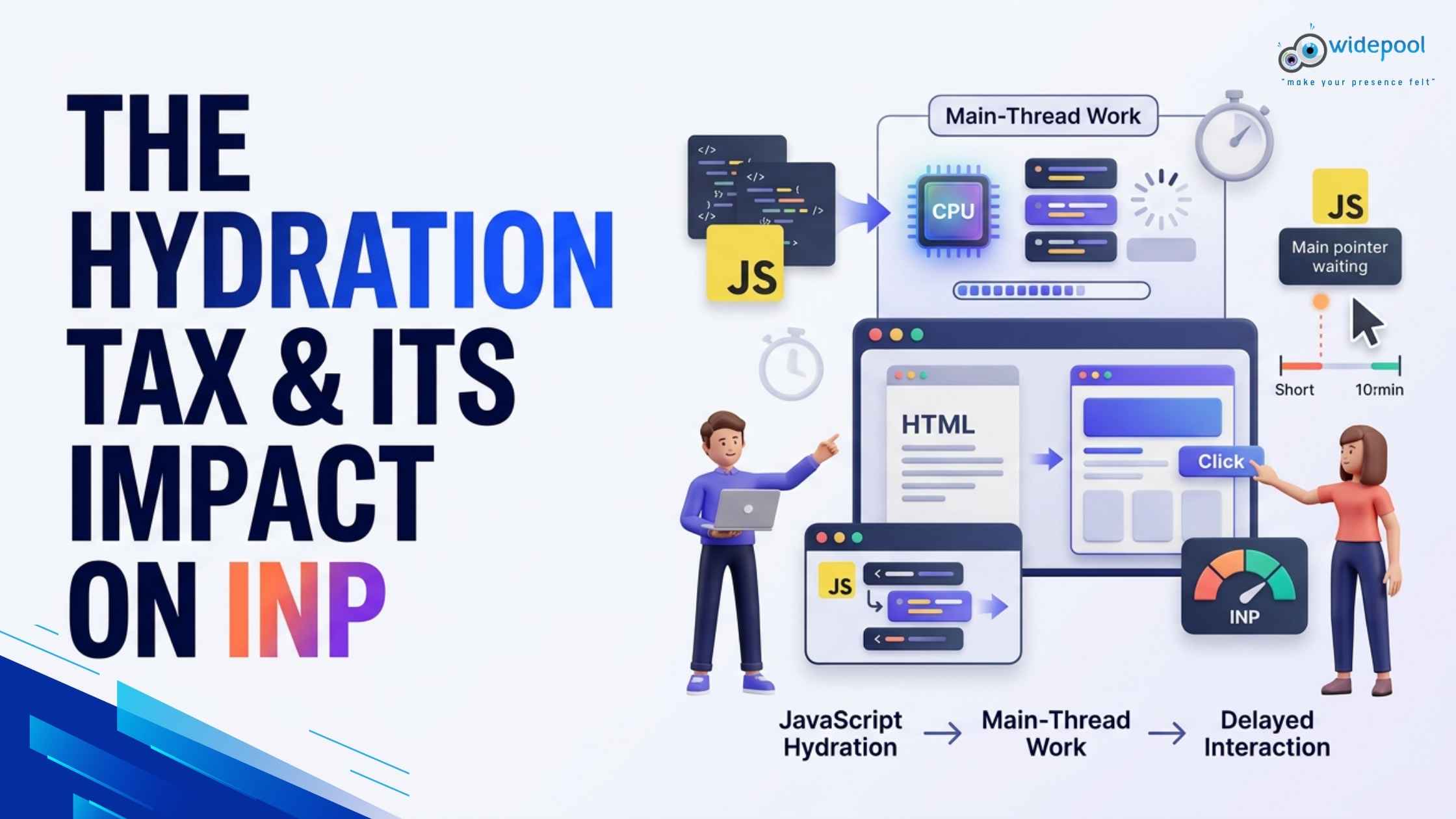
What Is The Hydration Tax INP And Why Does It Matter?
The hydration tax inp refers to the performance penalty that modern JavaScript frameworks—especially those using server-side rendering (SSR) and React hydration—impose during the “hydration” process. According to Google’s 2023 Web Almanac, over 40% of websites using SSR frameworks suffer from significant hydration delays that directly impact their Interactivity to Next Paint (INP) scores, a key metric in Core Web Vitals. This means that if your website is built with React, Next.js, or similar frameworks, your SEO and user experience could be silently suffering due to hydration tax inp.
In today’s fiercely competitive digital landscape, even a 100-millisecond delay can drop conversion rates by up to 7%. For business owners, marketers, and developers, understanding and mitigating hydration tax inp is not just a technical concern—it’s a business imperative.
How Does Hydration Performance Affect INP?
Hydration performance is the measure of how efficiently a web page transitions from static, server-rendered content to a fully interactive client-side application. During hydration, the browser’s JavaScript engine parses and executes the code that “wires up” event listeners and dynamic behaviors. If this process is slow or resource-intensive, it leads to poor INP (Interaction to Next Paint) scores, meaning users experience visible delays when trying to interact with your site.
- High hydration tax inp = Sluggish interactivity, frustrated users
- Efficient hydration performance = Faster responses, higher engagement
INP is now a Core Web Vital, replacing FID (First Input Delay) as a primary metric for Google’s page experience ranking. If your site’s INP is above 200ms, you risk losing both rankings and real-world users.
What Is INP And Why Is It A Game Changer For SEO?
INP, or Interaction to Next Paint, measures the latency of all user interactions on a web page (such as clicking buttons, links, or input fields), focusing on the slowest interaction. Unlike older metrics, INP captures the complete user experience by considering every interaction throughout a session.
A good INP is under 200 milliseconds. Anything above 500ms is considered poor by Google. Websites with high hydration tax inp often exceed these thresholds, slipping down in search engine rankings and alienating their audience.
How Do Core Web Vitals And Hydration Tax INP Interact?
Core Web Vitals are a set of performance signals—LCP (Largest Contentful Paint), CLS (Cumulative Layout Shift), and INP—that Google uses to determine page quality. Hydration tax inp predominantly affects INP by delaying the time it takes for a page to become responsive after the initial load.
- LCP: Impacted by slow server responses and heavy JavaScript bundles
- CLS: Disrupted by late-loading scripts and layout shifts
- INP: Most sensitive to hydration delays and JavaScript execution
If your hydration performance drags, your INP will suffer, and so will your SEO and business outcomes.
Why Does React Hydration Contribute To Hydration Tax?
React hydration is the process where React “attaches” event listeners to HTML that was rendered on the server. While this enables faster First Contentful Paint (FCP), it often leads to a heavy hydration tax inp because the browser must download, parse, and execute large JavaScript bundles before the page becomes interactive.
This delay is especially pronounced on mobile devices and slow networks—precisely where a large share of Indian users are browsing. If your React hydration process isn’t optimized, you’re losing precious INP points and potential customers.
How Does JavaScript Performance Influence Hydration Tax INP?
Poor JavaScript performance—often caused by bloated bundles, unnecessary libraries, or inefficient code—directly increases your hydration tax inp. The more JavaScript your site loads, the longer it takes to hydrate, and the worse your INP becomes.
- Large, unoptimized scripts = slow hydration
- Heavy use of third-party components = increased INP
- Complex state management = longer JavaScript execution times
Widepool’s web performance audits pinpoint these bottlenecks and provide actionable fixes to boost your JavaScript performance and INP.
How Can Frontend SEO Benefit From Tackling Hydration Tax?
Frontend SEO is the art and science of optimizing everything users see and interact with on your site. By reducing hydration tax inp, you create a faster, more engaging experience—directly improving your SEO performance.
- Faster INP = Higher Google rankings
- Better user experience = Lower bounce rates
- Optimized hydration performance = More conversions and sales
With the right SEO services and technical expertise, you can turn hydration tax from a liability into a competitive advantage.
What Steps Can You Take To Improve Hydration Tax INP?
Here’s a practical, step-by-step guide to reducing hydration tax inp and improving your INP and Core Web Vitals:
- Audit your hydration performance: Use tools like Lighthouse or WebPageTest to identify hydration bottlenecks.
- Optimize JavaScript bundles: Split code, remove unused dependencies, and leverage modern frameworks like React 18’s concurrent features.
- Defer non-critical hydration: Hydrate only above-the-fold content first; lazy-load interactive components.
- Minimize third-party scripts: Remove or delay loading unnecessary widgets and analytics.
- Partner with SEO experts: Engage with Widepool’s digital marketing and technical SEO team for in-depth audits and hands-on optimization.
Why Widepool Is Your Trusted Partner For SEO And Hydration Tax Optimization
Widepool is an award-winning digital marketing agency based in India, renowned for delivering measurable SEO results and technical excellence. Our specialists blend deep expertise in Core Web Vitals, JavaScript frameworks, and frontend SEO to give your business the edge it needs in today’s search-driven market.
- Proven track record of boosting INP and Core Web Vitals for Indian and global brands
- Customized strategies for React hydration and modern JavaScript performance
- Transparent reporting and continuous optimization for long-term SEO success
Don’t let hydration tax inp silently erode your rankings and revenue. Act now—your competitors are already optimizing.
Ready to take your website’s performance and SEO to the next level?
Fill out our contact form, call us at +91 9019676890 or +91 9986450820, or send a WhatsApp message from our website. Our expert team will reach out to set up a free consultation and help you dominate your niche.
About Widepool
Widepool is a leading digital marketing agency headquartered in India, specializing in search engine optimization, Core Web Vitals, and advanced web performance strategies for businesses of all sizes. With a focus on technical excellence, transparency, and measurable growth, Widepool empowers brands to achieve and sustain top search rankings.
Frequently Asked Questions
What is the “hydration tax” in web development, and how does it impact INP?
The “hydration tax” refers to the performance cost incurred when JavaScript frameworks like React re-activate server-rendered HTML on the client side. This process, known as React hydration, often leads to delayed interactivity and input responsiveness. As a result, users experience sluggish interfaces, which can negatively affect Interaction to Next Paint (INP)—one of the key Core Web Vitals that measures how quickly a page responds to user input.
Why does hydration performance matter for modern websites?
Hydration performance is crucial because it directly impacts user-perceived speed and satisfaction. Slow hydration can block user interactions, causing increased INP values and potentially harming frontend SEO and user retention. Fast, efficient hydration ensures that interactive elements are usable as soon as possible, leading to better engagement and improved Core Web Vitals scores.
How does the hydration tax inp affect Core Web Vitals and SEO rankings?
When the hydration tax inp is high, it results in delayed interaction readiness, which negatively impacts INP—a critical metric in Google’s Core Web Vitals. Poor INP scores can signal to search engines that your site is unresponsive, which may lead to lower rankings. Optimizing hydration is therefore essential to maintain strong frontend SEO and meet performance standards set by search engines.
What challenges do React hydration and JavaScript performance pose for INP?
React hydration and overall JavaScript performance can create significant bottlenecks for INP. Heavy or poorly optimized hydration scripts can block the main thread, causing delays in handling user input. This leads to a higher INP score, reflecting a slower, less responsive experience for users—something Google’s Core Web Vitals algorithm penalizes.
How does Widepool help reduce the hydration tax and improve INP?
Widepool provides advanced optimization solutions that target both hydration performance and overall JavaScript efficiency. By implementing selective and incremental hydration strategies, Widepool minimizes the hydration tax, ensuring that interactive elements become usable much sooner. This results in lower INP values and a better user experience, while also boosting Core Web Vitals and frontend SEO.
Can Widepool’s solutions be integrated with existing React applications?
Yes, Widepool’s optimization techniques are designed to integrate seamlessly with modern React applications. By refactoring hydration flows and improving JavaScript performance, Widepool helps teams achieve better INP without requiring a complete rewrite of their codebase.
What measurable benefits can teams expect after using Widepool’s approach?
Teams that adopt Widepool’s solutions typically see significant reductions in INP scores, faster initial interactivity, and smoother client-side transitions. These improvements directly contribute to higher Core Web Vitals scores and better frontend SEO, increasing both user engagement and visibility in search results.
Is it possible to monitor hydration performance and INP improvements?
Absolutely. Widepool offers detailed analytics and reporting tools that enable teams to track hydration performance, JavaScript execution times, and INP metrics over time. This transparent approach allows for continuous optimization and clear demonstration of performance gains.